
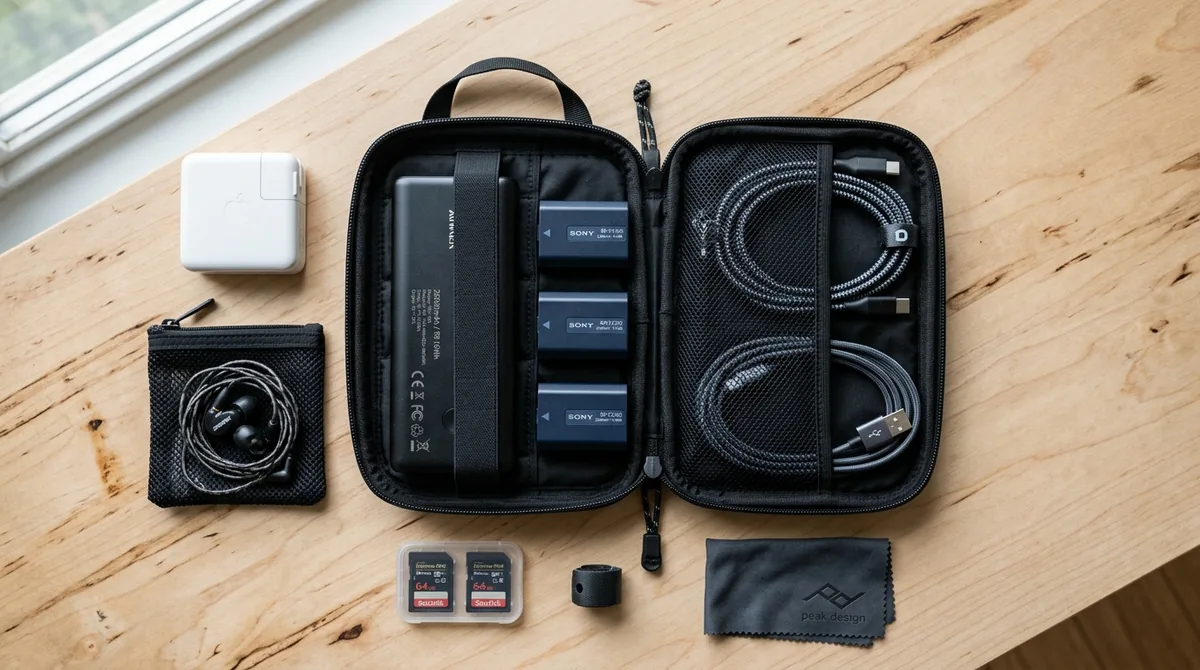
Carrying portable electronics, power banks, and rechargeable devices on commercial flights is strictly regulated by international aviation bodies, including the Federal Aviation Administration (FAA) and the International Air Transport Association (IATA). Because damaged or short-circuited lithium cells can enter catastrophic thermal runaway, passengers must adhere to specific capacity thresholds and packing rules.
1. Calculating Battery Watt-Hours (Wh)
Aviation regulations govern lithium batteries by energy capacity measured in Watt-hours (Wh), not milliampere-hours (mAh). Consumer power banks frequently state capacity in mAh at internal cell nominal voltage (usually 3.7V for lithium-ion polymer chemistry).
$$\text{Watt-hours (Wh)} = \frac{\text{Milliampere-hours (mAh)} \times \text{Nominal Voltage (V)}}{1000}$$
| Nominal Stated Capacity (mAh at 3.7V) | Calculated Energy (Wh) | Regulatory Classification | Typical Consumer Device |
|---|---|---|---|
| 5,000 mAh | 18.5 Wh | Permitted in carry-on, unrestricted quantity | Compact emergency phone charger |
| 10,000 mAh | 37.0 Wh | Permitted in carry-on, unrestricted quantity | Standard daily power bank |
| 20,000 mAh | 74.0 Wh | Permitted in carry-on, unrestricted quantity | High-capacity phone/tablet charger |
| 26,800 mAh | 99.16 Wh | Maximum unrestricted carry-on limit | Heavy laptop power bank (under 100 Wh) |
| Over 27,000 mAh (e.g. 150 Wh) | 101–160 Wh | Airline approval required, max 2 spares | Large cinema camera battery or drone pack |
Batteries lacking legible manufacturer labels indicating Wh rating or mAh and voltage are subject to immediate confiscation at airport security checkpoints.
2. Checked Baggage Restrictions vs. Carry-On Rules
The fundamental aviation safety principle is simple: spare, uninstalled lithium batteries and portable power banks must remain in the passenger cabin.
- In Checked Luggage: Strictly prohibited for spare batteries, external power banks, and standalone lithium cells. If a fire occurs in the pressurized cargo hold, automated Halon suppression systems cannot easily extinguish chemical oxygen-generating lithium fires.
- Installed in Devices: Laptops, cameras, and electric shavers containing installed batteries are allowed in checked luggage only if completely powered off (not in sleep or standby mode) and protected against accidental activation.
- Smart Luggage: Suitcases equipped with integrated power banks must feature easily removable battery packs. The battery must be extracted and carried into the cabin if the bag is checked at the gate.
3. Short-Circuit Prevention and Safe Transport
Terminal short-circuits caused by loose coins, keys, or zippers are a leading cause of airport battery fires:
- Terminal Insulation: Keep spare camera and drone batteries in their original retail packaging, individual plastic sleeves, or apply non-conductive electrical tape across exposed metal contacts.
- Damaged or Swollen Cells: Never transport batteries with bulging casings, visible dents, punctures, or chemical odors. Airline crews and security screeners will deny boarding for damaged hazardous cells.
- Cabin Storage Precautions: Never allow heavy carry-on bags to crush battery packs inside overhead bins, and keep power banks away from direct sunlit windows.