
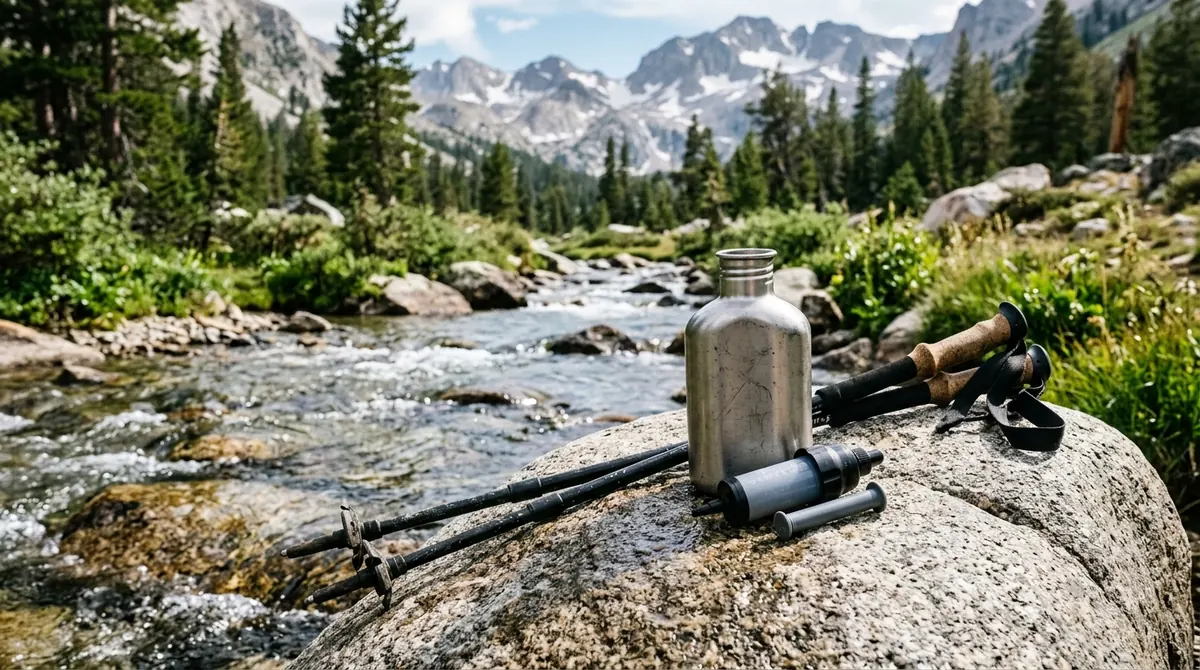
Maintaining optimal hydration in remote wilderness environments requires more than merely carrying a water reservoir and drinking when thirsty. Physiological fluid balance involves a continuous interplay between sweat rate, respiration loss, electrolyte replenishment, and reliable water purification. On multi-day expeditions or high-exertion ascents, mismanaging fluid intake can lead to debilitating hyponatremia or acute dehydration, both of which severely compromise cognitive decision-making and physical stamina.
Estimating Sweat Rates and Metabolic Fluid Loss
Fluid requirements vary drastically based on ambient temperature, relative humidity, pack weight, and sustained aerobic intensity. Under moderate exertion at moderate temperatures (15°C to 20°C), an average hiker loses between 400 mL and 800 mL of fluid per hour. In alpine or arid environments with high thermal loads, sweat rates frequently exceed 1,200 mL per hour.
| Environmental Condition | Typical Fluid Loss (mL/hr) | Primary Mineral Losses | Recommended Replenishment Strategy |
|---|---|---|---|
| Cool Alpine Forest (<15°C) | 350 – 500 mL | Baseline Sodium, Potassium | Plain water with balanced meal snacks |
| Moderate Elevation (15°C–25°C) | 600 – 900 mL | Elevated Sodium (500–800 mg/L) | 250 mg sodium per 500 mL water |
| Arid Canyon / High Heat (>28°C) | 1,000 – 1,400 mL | High Sodium, Magnesium, Chloride | Full-spectrum hypotonic electrolyte solution |
Relying solely on thirst as an indicator is physiologically flawed; by the time thirst manifests, plasma volume has typically declined by 1.5% to 2%, resulting in measurable reductions in cardiac output and heat dissipation capacity.
The Chemistry of Electrolyte Replacement: Osmolality Matters
Drinking large volumes of pure mountain water without concurrent electrolyte intake dilutes serum sodium concentrations, creating hypotonic extracellular fluid. In severe cases, this triggers exercise-associated hyponatremia (EAH), characterized by nausea, mental confusion, and cerebral edema.
To optimize gastric emptying and intestinal absorption, oral rehydration solutions should maintain a slightly hypotonic osmolality (between 200 and 260 mOsm/L). Solutions that are too concentrated (hypertonic, such as undiluted fruit juices or hyper-concentrated sports drinks) draw water into the intestinal lumen, delaying systemic hydration and inducing gastrointestinal distress.
Key electrolyte targets per liter of fluid under sustained exertion include:
- Sodium: 400 to 700 mg (essential for maintaining plasma volume and active glucose co-transport).
- Potassium: 100 to 200 mg (supports intracellular osmotic balance and neuromuscular signaling).
- Magnesium: 20 to 50 mg (prevents peripheral muscle cramping and supports mitochondrial ATP production).
Mechanical Filtration and Pathogen Removal Standards
Surface water sources in backcountry watersheds frequently harbor protozoan cysts (Giardia lamblia, Cryptosporidium parvum) and pathogenic bacteria (Escherichia coli, Campylobacter). Selecting an appropriate filtration system depends on water turbidity, temperature, and microbiological risk profile.
Hollow-fiber membrane filters with a pore size of 0.1 to 0.2 microns effectively eliminate bacteria and protozoa through mechanical exclusion. However, standard microfiltration membranes do not remove viral pathogens or dissolved agricultural contaminants. When traveling in regions where human enteric viruses are prevalent, secondary chemical treatment (chlorine dioxide or ultraviolet irradiation) must follow primary microfiltration.
During sub-freezing temperatures, hollow-fiber filters must be stored inside a sleeping bag or jacket pocket; microscopic ice formation expands within the capillary fibers, tearing the membrane and permanently voiding its filtration integrity without visible external damage.