
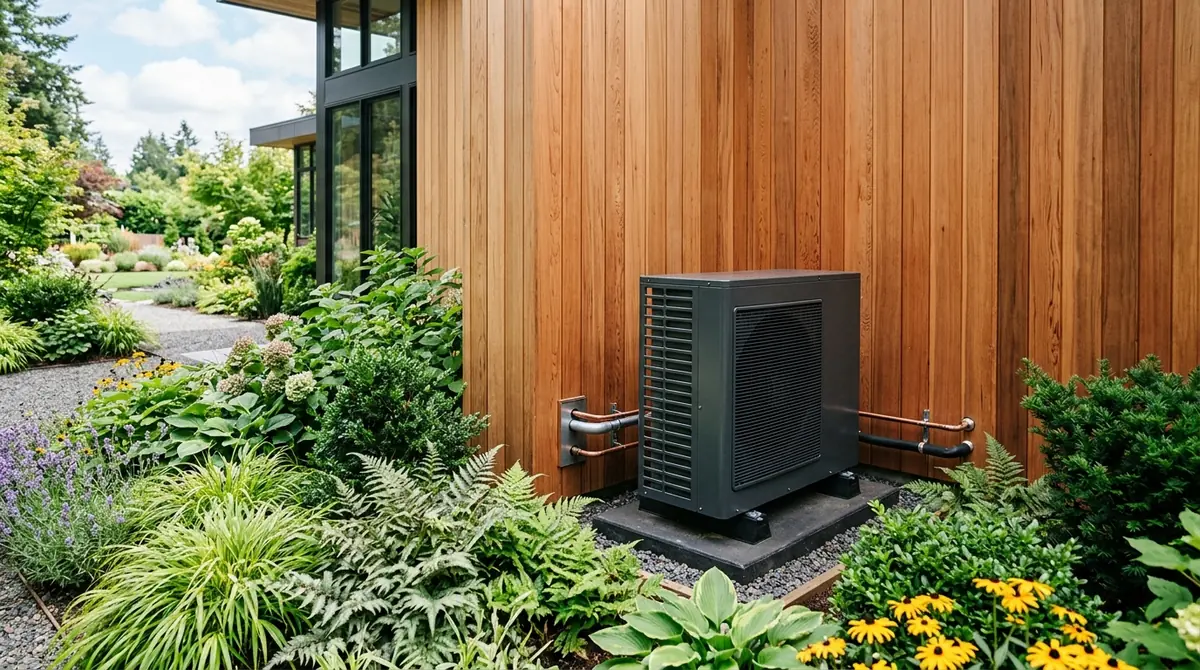
Heat pumps provide space heating, cooling, and dehumidification by transferring thermal energy rather than creating it through fossil fuel combustion or electrical resistance. When evaluating residential HVAC replacements, understanding regulatory efficiency ratings is vital to ensure adequate winter heating capacity without excessive electrical utility expenses.
1. Demystifying the Testing Standards: SEER2 and HSPF2
In recent years, regulatory bodies updated testing metrics to reflect real-world ductwork resistance. The revised M1 test procedure establishes static pressure benchmarks five times higher than historical tests (0.50 in. w.c. versus 0.10 in. w.c.), resulting in "Version 2" metrics:
| Metric | Full Term | Operating Mode | Measurement Basis |
|---|---|---|---|
| SEER2 | Seasonal Energy Efficiency Ratio 2 | Cooling | Total cooling output (BTU) divided by total electric energy (Wh) over a normal cooling season |
| EER2 | Energy Efficiency Ratio 2 | Peak Cooling | Instantaneous cooling capacity at an exterior temperature of 35°C (95°F) |
| HSPF2 | Heating Seasonal Performance Factor 2 | Heating | Total seasonal heating output (BTU) divided by total electrical energy input (Wh) |
| COP | Coefficient of Performance | Heating/Cooling | Dimensionless ratio of useful thermal energy output to direct electrical energy input |
A heat pump operating with a COP of 3.5 delivers 3.5 kilowatt-hours of thermal heat for every 1.0 kilowatt-hour of electricity consumed. Under identical conditions, standard electric resistance baseboards deliver a COP of exactly 1.0.
2. Cold-Climate Heat Pump Dynamics
Traditional heat pumps suffered significant thermal output decay as outdoor temperatures fell below freezing, necessitating costly auxiliary electric resistance strips. Modern cold-climate heat pumps overcome this limitation through inverter-driven variable-speed scroll compressors and enhanced vapor injection:
- Inverter Modulation: The compressor modulates output incrementally between 20% and 120% of nominal capacity rather than cycling on and off.
- Vapor Injection: Injecting intermediate-pressure vapor into the compression cycle lowers discharge temperatures and prevents loss of mass flow rate in sub-zero weather.
- Cold-Climate Certification: Equipment certified for cold climates maintains at least 70% of rated heating capacity at -15°C (5°F) with a COP exceeding 1.75.
3. Practical Manual J Sizing and Heat Balance Point
Oversizing a heat pump to guarantee winter capacity degrades summer performance by causing short-cycling and poor humidity control. Proper engineering requires:
- Accurate Heat Loss Calculation: Perform an ACCA Manual J load calculation based on building envelope insulation (R-values), air infiltration rates (ACH50 from blower door tests), and local 99% winter design temperatures.
- Determining the Thermal Balance Point: The outdoor temperature where the heat pump's diminishing thermal capacity intersects the home's increasing heat loss curve.
- Supplemental Staging: Setting the thermostat balance point prevents auxiliary resistance heating from activating prematurely during mild cold snaps.