
The Illusion of Automatic Credit Card Coverage
Many international travelers and digital nomads assume that booking airline tickets with a premium credit card provides comprehensive emergency health coverage while abroad. In reality, credit card travel protections are primarily designed for trip cancellation, delayed luggage, or localized rental car collision damage.
When medical coverage is bundled with retail credit cards, it is almost universally capped at low secondary limits ($2,500 to $10,000)—barely sufficient to cover an outpatient ER visit in private overseas clinics. In catastrophic events requiring intensive care stabilization, emergency surgical intervention, or international air ambulance transport, an uninsured patient faces catastrophic out-of-pocket liabilities exceeding $100,000 to $250,000.
The Operational Mechanics of Emergency Medical Evacuation
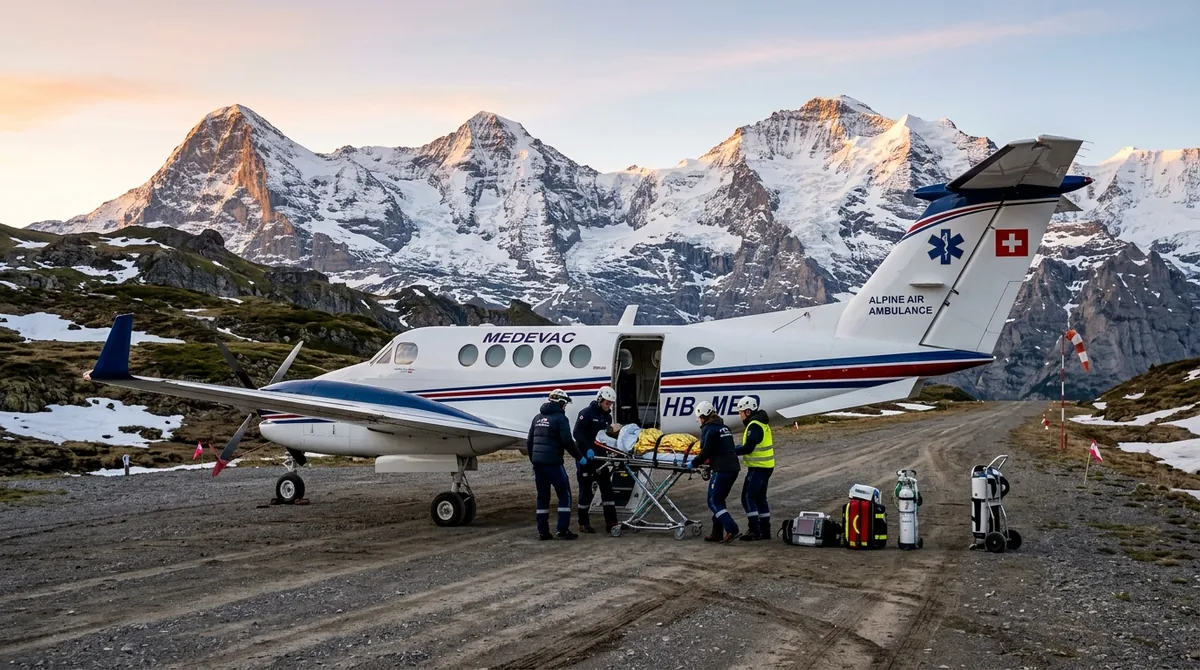
The single most critical rider in any international travel policy is Emergency Medical Evacuation and Repatriation of Remains:
- Local Hospital Transport vs International Evacuation: Standard local ambulance services only transport patients to the nearest medical clinic. In developing regions, remote island territories, or alpine zones, the nearest facility may lack trauma surgeons, cardiac catheterization labs, or sterile surgical suites.
- "Hospital of Choice" vs "Nearest Adequate Facility": Budget travel policies dictate that the insurer will only evacuate the patient to the nearest adequate facility determined by the insurer's medical director. Once stabilized, the patient remains there. Premium international policies include a Hospital of Choice rider, authorizing specialized aeromedical transport directly back to the patient's home country or a tertiary hospital center of their choosing.
+───────────────────────────────────────────────────────────────+
|               Aeromedical Evacuation Logistics                |
|                                                               |
|  [Remote Accident Site] ── Local Ground/Boat ─> [Rural Clinic] |
|                                                       │       |
|  [Dedicated ICU Air Ambulance] <── Insurer Medical Approval   |
|  (Flight Doctor, Ventilator, ECMO Equipment)          │       |
|                                                       ▼       |
|  [Tertiary Hospital Center / Home Country Medical Repatriation]|
+───────────────────────────────────────────────────────────────+
The True Cost of an International Air Ambulance
Chartering an intensive-care-configured jet (such as a Bombardier Learjet or Gulfstream equipped with airborne ventilators, continuous infusion pumps, and specialized flight physicians) incurs massive fixed costs:
- Caribbean / Central America to Miami: $25,000 – $45,000
- Western Europe to North America: $65,000 – $110,000
- Southeast Asia / Australasia to Europe: $150,000 – $220,000
Without a guaranteed direct-billing policy with an evacuation limit of at least $250,000 to $500,000, aeromedical flight operators will not spin up turbine engines until personal wire transfers clear banking escrow.
Critical Policy Exclusions to Audit
When evaluating international health insurance (such as Allianz Global, GeoBlue, Cigna Global, or SafetyWing), policyholders must scrutinize five frequent statutory exclusions:
1. Pre-Existing Condition Look-Back Periods
Most standard travel policies exclude coverage for any medical condition that manifested symptoms, required medication adjustments, or was evaluated by a physician within a 60 to 180-day look-back window prior to policy inception. If a traveler with controlled asthma has their inhaler prescription modified 30 days before departure, a subsequent severe asthma flare-up abroad can be classified as a pre-existing condition and denied entirely. Look for policies offering an explicit Waiver of Pre-Existing Conditions.
2. High-Risk Activities and Adventure Sports Riders
Standard policies explicitly exclude injuries sustained during activities classified as hazardous:
- Scuba diving below 18 to 30 meters (requiring PADI Advanced certification or hyperbaric chamber riders);
- Trekking or mountaineering above 2,500 to 3,000 meters elevation;
- Operating two-wheeled motor vehicles (scooters/motorcycles) without a valid motorcycle endorsement on the driver's domestic license, or riding without a helmet.
3. Government Travel Advisories and Sanctioned Regions
If the traveler's national foreign office (such as the UK FCDO or US State Department) issues a "Level 4: Do Not Travel" warning for a specific country or province prior to arrival, medical insurance policies typically void all coverage within those geographical boundaries.
Practical Policy Acquisition Protocol
Before crossing international borders:
- Verify policy limits: secure a minimum of $100,000 for emergency medical treatment and $250,000 for emergency medical evacuation.
- Ensure the insurer provides a 24/7 Multi-Lingual Assistance Hotline with direct-pay guarantees to avoid upfront credit card max-out requirements.
- Save digital and laminated physical copies of your policy number, emergency assistance telephone numbers, and blood group alongside your passport.